
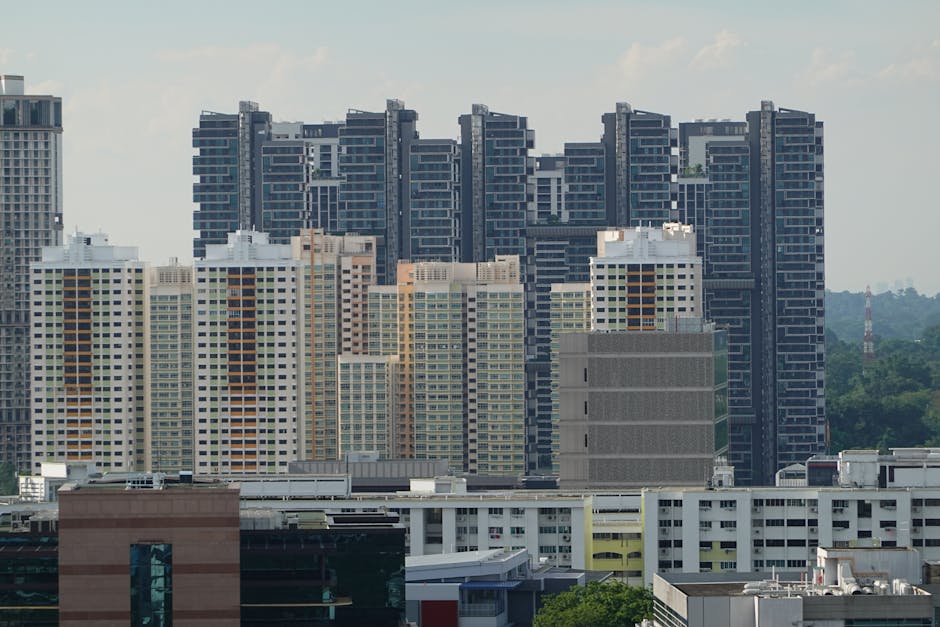
Singapore’s residential market splits into three worlds — HDB public housing (about 8 in 10 residents), private condos/apartments, and landed homes. Prices are shaped by government cooling measures (ABSD, LTV, TDSR), quarterly URA and HDB data, and location tiers (CCR, RCR, OCR). Understand which segment you’re in before you read any headline.
How is the Singapore property market structured?
The market has three main residential segments. HDB flats are subsidised public housing that most Singaporeans live in. Private condominiums and apartments are developer-built, with facilities and foreign-buyer access. Landed homes — terraces, semi-detached houses and Good Class Bungalows — sit at the top, largely reserved for citizens. Each moves on its own supply, demand and rules.
| Segment | Who buys | Key traits |
|---|---|---|
| HDB | Citizens & PRs (eligibility rules) | Subsidised, 99-yr lease, MOP applies |
| Private condo / EC | Citizens, PRs, foreigners (with ABSD) | Facilities, freehold or 99-yr |
| Landed | Mostly citizens | Scarce, freehold common, land value |
What government rules shape prices?
Three “cooling measures” matter most. The Additional Buyer’s Stamp Duty (ABSD) taxes second-and-subsequent and foreign purchases. The Loan-to-Value (LTV) limit caps how much you can borrow. The Total Debt Servicing Ratio (TDSR) caps monthly repayments at 55% of income. Together they set your real budget — always confirm current figures at iras.gov.sg and mas.gov.sg.
Where do reliable prices come from?
Use official data, not asking prices. The URA publishes the private residential price index quarterly; HDB publishes resale prices (updated regularly) and a resale price index. SingStat aggregates both. Portals like EdgeProp and SRX are good for transacted-price context. Location tiers — Core Central Region (CCR), Rest of Central Region (RCR) and Outside Central Region (OCR) — explain most price differences.
Frequently asked questions
Can foreigners buy property in Singapore?
Yes, foreigners can buy private condos and apartments, but pay 60% ABSD and generally cannot buy landed homes or HDB flats without special approval.
What is the difference between CCR, RCR and OCR?
They are URA’s three geographic price tiers: CCR is the prime core (districts 9,10,11, downtown, Sentosa), RCR is the city fringe, and OCR is the suburban mass market.
General information, not financial advice. Verify all rules and figures with URA, HDB, IRAS and MAS before transacting.
Quick Self-Check: Do You Know the Market?
Tap each question to reveal the answer and test your grasp of how Singapore’s property market works.
Roughly what share of Singaporeans live in HDB flats?
About 8 in 10 — HDB public housing is home to the large majority of residents; private condos and landed homes make up the rest.
Which tax specifically targets second and foreign property purchases?
The Additional Buyer’s Stamp Duty (ABSD). It’s a key cooling measure layered on top of the standard Buyer’s Stamp Duty.
What do CCR, RCR and OCR actually mean?
They are URA’s three geographic price tiers: Core Central Region (prime), Rest of Central Region (city fringe) and Outside Central Region (suburban mass market).
Where should you get reliable transacted prices?
Official sources — URA for private and HDB for resale flats — not agent asking prices, which are optimistic by nature.