
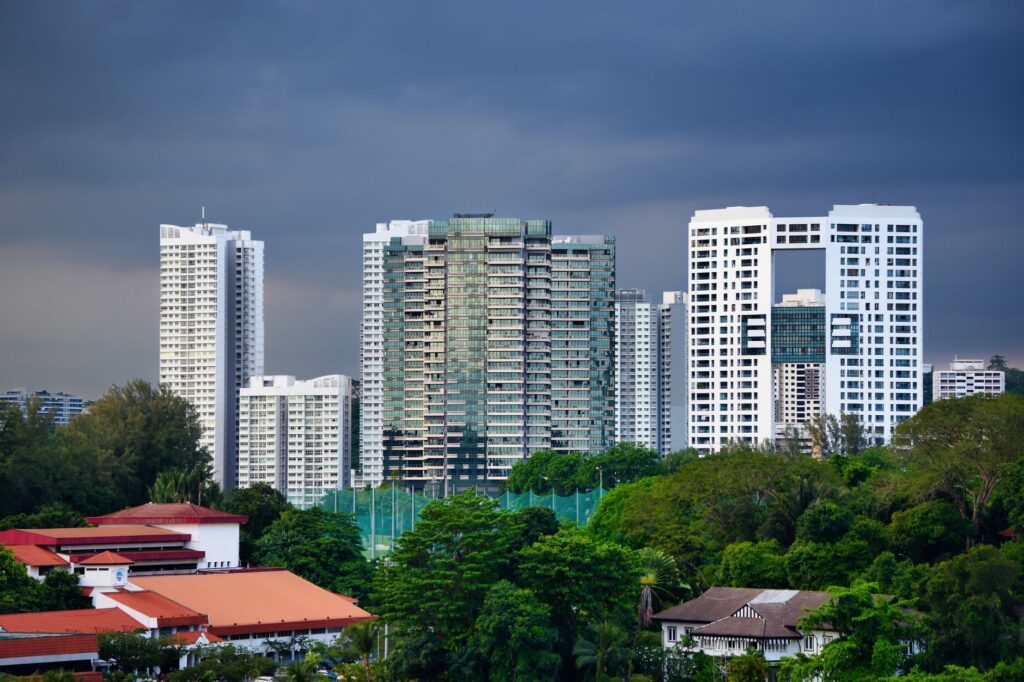
Singapore’s Q2 2026 flash estimates show a two-speed market — private home prices edged up about 0.5%, while HDB resale prices slipped roughly 0.3%. The rise was carried by the prime Core Central Region (CCR) and landed homes (up ~2%), not by broad-based strength. For mass-market buyers, this softer middle is quietly a better entry window; at the top end, scarcity keeps doing the heavy lifting.
Is Singapore’s property market going up or down in 2026?
Both, at once — and that is the whole story. According to Q2 2026 flash estimates, the private residential price index rose about 0.5% quarter-on-quarter while the HDB resale index fell around 0.3%. A single “prices are rising” headline hides a market splitting into two tracks: a resilient prime tier and a softening mass market. Where you sit changes what the data means for you.
The composition matters more than the headline number. The private index’s gain was led by landed homes and the Core Central Region (CCR), with the prime segment jumping roughly 2%, even as prices eased across other regions. In plain terms: the top of the market is still finding buyers with conviction and cash, while the broad middle cools alongside a more cautious jobs cycle.
What does a “two-speed market” mean for a homebuyer?
A two-speed market means different segments are moving in opposite directions at the same time. Prime and landed are appreciating on scarcity; mass-market condos and HDB resale are flat-to-down on affordability limits and interest-rate caution. Your strategy should follow the segment you are actually buying in — not the national index.
| Segment | Q2 2026 direction (flash) | What’s driving it | Buyer read-through |
|---|---|---|---|
| Landed / GCB | Up (~2% prime) | Fixed supply, freehold scarcity, off-market demand | Seller’s market; negotiate on individual condition, not the index |
| Core Central Region (CCR) condos | Up | Prime scarcity, high-net-worth conviction | Premium holds; value depends on project and floor |
| RCR / OCR condos (mass market) | Flat to softer | Affordability ceilings, cautious jobs outlook | Better negotiating position; more launch competition |
| HDB resale | Down (~0.3%) | Weaker jobs sentiment, cooling from record highs | Window for upgraders/first-timers; watch lease decay |
Why are HDB resale prices falling while private prices rise?
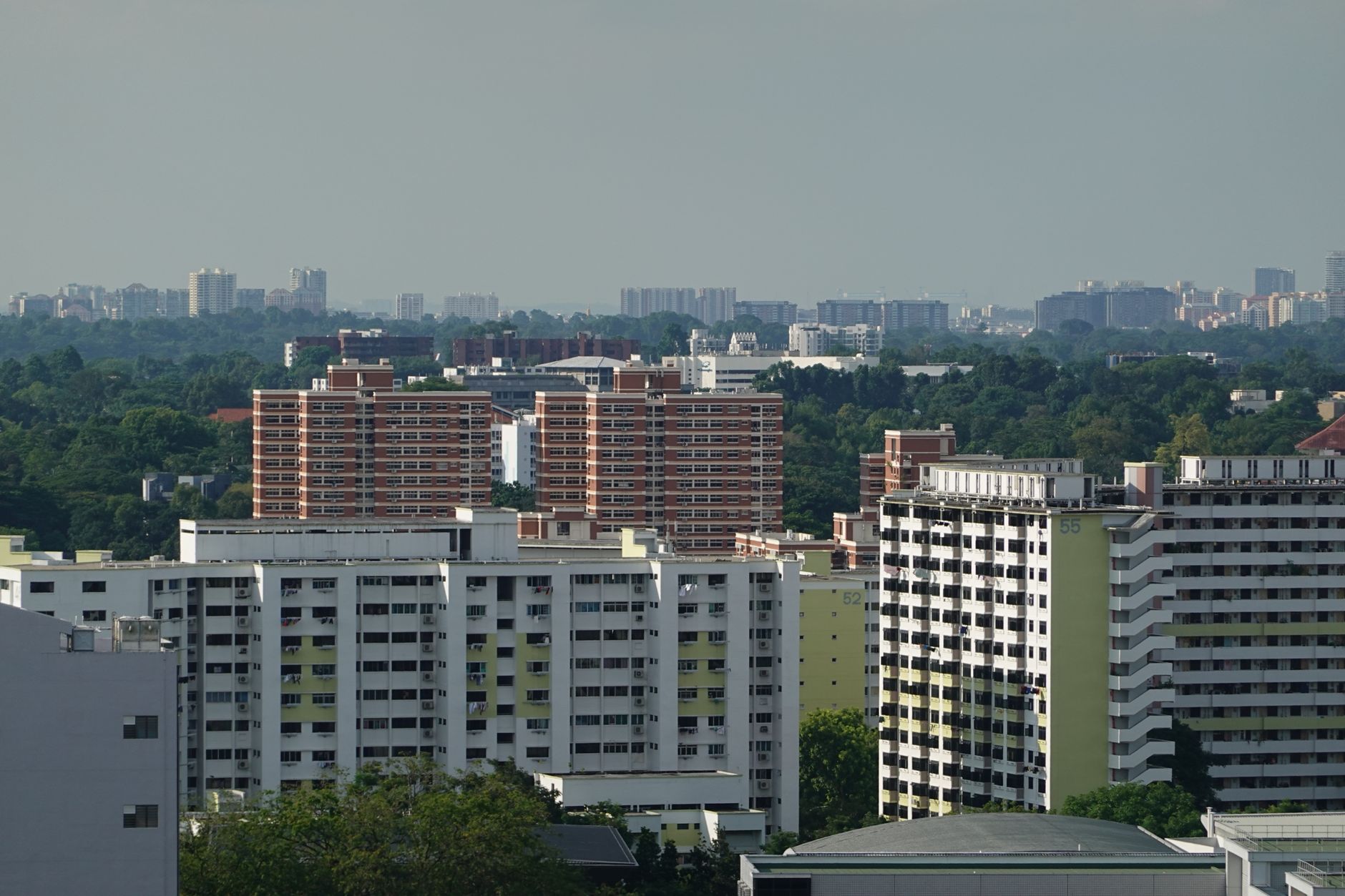
HDB resale softened about 0.3% in Q2 2026 largely because a weaker jobs outlook makes mass-market buyers more cautious, and because resale prices are cooling from a run of record highs. Private prime, by contrast, draws on a buyer pool less sensitive to the wage cycle. The two segments answer to different demand engines — which is exactly why they can diverge in the same quarter.
For HDB upgraders eyeing a private unit, this divergence is a double-edged sword: your flat may sell for slightly less than a year ago, but a mass-market condo in the RCR or OCR is also facing more competition among sellers. The gap between “sell high, buy high” and “sell soft, buy soft” is narrower than the headlines imply.
Do cooling measures still apply in 2026?
Yes. As of mid-2026 the cooling measures introduced in April 2023 remain fully in force. The Additional Buyer’s Stamp Duty (ABSD) is unchanged, despite industry calls at Budget 2026 for a calibrated rollback on foreign buyers. Always confirm the current rate with IRAS before transacting — these figures change by government announcement, not gradually.
| Buyer profile | ABSD rate (since Apr 2023) |
|---|---|
| Singapore Citizen — 1st property | 0% |
| Singapore Citizen — 2nd property | 20% |
| Singapore Citizen — 3rd & subsequent | 30% |
| PR — 2nd property | 30% |
| PR — 3rd & subsequent | 35% |
| Foreigner — any residential property | 60% |
What should you actually do in a two-speed market?
- Buy the segment, not the headline. A “+0.5%” national print is meaningless if you are shopping OCR condos that are flat — negotiate accordingly.
- Mass-market buyers: use the softer middle. More launch competition and cautious sentiment hand you leverage you did not have 12 months ago.
- Upgraders: model both legs together. A slightly lower sale price on your HDB may be offset by a better entry on a mass-market condo. Run the full switch, not just the sale.
- Prime buyers: focus on the asset, not the timing. In CCR and landed, scarcity — not the cycle — sets the price. Project, tenure and floor matter more than the quarter.
- Confirm the rules before you commit. ABSD, LTV limits and TDSR all shape your true budget. Check current figures with IRAS and MAS.
Test your read on the market
Think you can tell prime hype from mass-market reality? Take the quick quiz below.
Quiz: Are You Reading the 2026 Market Right?
Frequently asked questions
Did Singapore private property prices go up in Q2 2026?
Yes — flash estimates put the private residential price index up about 0.5% quarter-on-quarter in Q2 2026. However, the gain was concentrated in the prime Core Central Region and landed homes (up ~2%), while other regions were flatter.
Why did HDB resale prices fall in Q2 2026?
HDB resale prices slipped around 0.3% as a weaker jobs outlook made buyers more cautious and the market cooled from record highs. It is a moderation, not a collapse.
Is now a good time to buy a mass-market condo in Singapore?
For buyers focused on the RCR and OCR, the softer middle of the market offers more negotiating room and more launch competition than a year ago. As always, affordability (LTV, TDSR) and the specific project matter more than market timing.
What is the ABSD rate for a Singapore citizen’s second property?
Since April 2023, the ABSD for a Singapore citizen buying a second residential property is 20%. Foreigners pay 60% on any residential purchase. Confirm current rates at iras.gov.sg before transacting.
Sources: Q2 2026 URA/HDB flash estimates as reported by The Business Times; cooling-measure rates per the Ministry of Finance / MND / MAS announcement, April 2023. This article is general commentary, not financial advice — verify all figures with official sources (URA, HDB, IRAS, MAS) before making a decision.